
Do you find the idea of a three-wheeled car fascinating?
Three-wheeled cars are very uncommon and may even
be considered unusable by some people, but we find that
they are interesting to learn about and even more
interesting to drive. Keep reading to discover our top 10
picks from the category of three-wheeled mass
production concept cars, prototypes and futuristic
concept cars designed for contest-only presentation.
Benz wanted to create a four-wheel vehicle, but he simply
couldn’t develop a steering system he thought was
adequate, so he connected the engine to two wheels at the
rear and placed one up front that was controlled by a
horizontal bar.
The world’s first car may have been a three-wheeler, or trike
design, but it was by no means the last. In fact, three-wheel
cars were once very common on the roads, and even some
of the larger automakers like Mazda and BMW made them.
Today, three-wheelers are still on the road, and car
companies continue to make exotic concept cars with just
three wheels. But why make a vehicle with three wheels,
anyway? What’s the point?
The benefits include the potential for smaller size, making
transportation cheaper, simpler and even more fuel-efficient.
Many of them fill the gap between car and motorcycle,
offering a package that’s light and maneuverable like a
motorcycle, yet with a car’s seating and protection benefits.
They also boast improved aerodynamics because of their
inherently triangular shape, yet with one fewer wheel, some
designs are not quite as stable and therefore are more
prone to tipping over than conventional, four-wheeled cars.
However, there are plenty of them out there. Some are
small cars, some are light-duty trucks or commercial
vehicles, and others are pure performance machines not
unlike big go-karts and motorcycles. Some have two wheels
up front, others have just one. The designs are as widely
varied as the Reliant Robin, a snub-nosed three-wheeler that
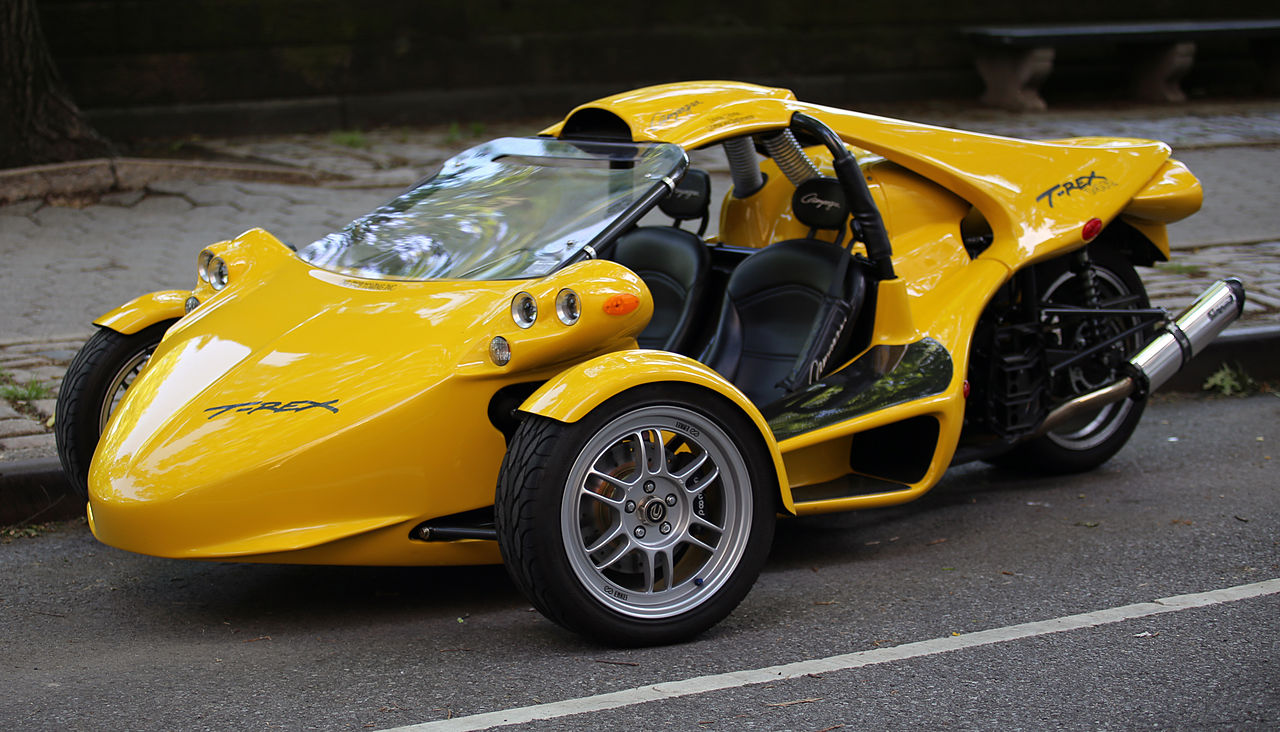
looks a lot like a clown car, to the Campagna Motors T-Rex,
which can accelerate from 0 to 60 miles per hour (0 to 96.6
kilometers per hour) in about four seconds.
 purity's blog