
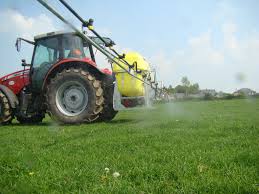
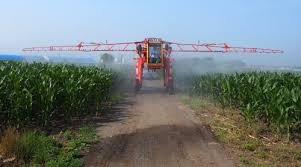
A sprayer is a device used to spray a liquid, where sprayers are commonly used for projection of water, weed killers, crop performance materials, pest maintenance chemicals, as well as manufacturing and production line ingredients. In agriculture, a sprayer is a piece of equipment that is used to apply herbicides, pesticides, and fertilizers on agricultural crops. Sprayers range in size from man-portable units (typically backpacks with spray guns) to trailed sprayers that are connected to a tractor, to self-propelled units similar to tractors, with boom mounts of 4-30 feet up to 60–151 feet in length depending on engineering design for tractor and land size
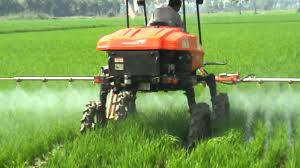
Sprayers are fully integrated, mechanical systems, meaning they are composed of various parts and components that work together to achieve the desired effect, in this case: the projection of the spray fluid. This can be as simple as a hand sprayer attached to a bottle that is pumped and primed by a spring-lever, tube, and vacuum-pressure; or as complex as a 150 foot reach boom sprayer with a list of system components that work together to deliver the spray fluid.
For more complex sprayers, such as agricultural sprayers, common system components include: the spray nozzle, sometimes with a spray gun, fluid tank, sprayer pump, pressure regulators, valves and gaskets, and fluid plumbing.[2] The sprayer pump can be just as important as the sprayer type itself as there are many sprayer pump design types with various construction materials, inlet/outlet sizes, and performance specifications. Common sprayer pump types include diaphragm, centrifugal, and roller pumps
 purity's blog