Smart watches

smartwatch is a wearable computer in the form of a wristwatch; modern smartwatches provide a local touchscreen interface for daily use, while an associated smartphone app provides for management and telemetry (such as long-term biomonitoring). While early models could perform basic tasks, such as calculations, digital time telling, translations, and game-playing, 2010s smartwatches have more general functionality closer to smartphones, including mobile apps, a mobile operating system and WiFi/Bluetooth connectivity. Some smartwatches function as portable media players, with FM radio and playback of digital audio and video files via a Bluetooth headset. Some models, called ‘watch phones’ (or vice versa), have mobile cellular functionality like making calls.[1][2][3]

While internal hardware varies, most have an electronic visual display, either backlit LCD or OLED.[4] Some use transflective or electronic paper, to consume less power. They are generally powered by a rechargeable lithium-ion batteryPeripheral devices may include digital camerasthermometersaccelerometerspedometersheart rate monitorsaltimetersbarometerscompassesGPS receivers, tiny speakers, and microSD cards, which are recognized as storage devices by many other kinds of computers.
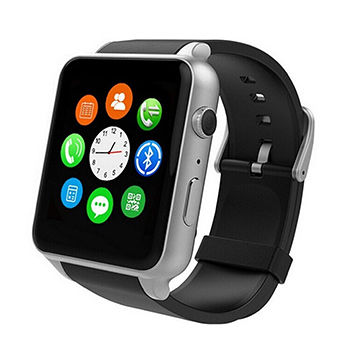
Software may include digital mapsschedulers and personal organizerscalculators, and various kinds of watch faces. The watch may communicate with external devices such as sensors, wireless headsets, or a heads-up display. Like other computers, a smartwatch may collect information from internal or external sensors and it may control, or retrieve data from, other instruments or computers. It may support wireless technologies such as BluetoothWi-Fi, and GPS. For many purposes, a “watch computer” serves as a front end for a remote system such as a smartphone, communicating with the smartphone using various wireless technologies. Smartwatches are advancing, especially their design, battery capacity, and health-related applications.[5]
Types of tech

Continuation.. .

Reusable rockets
One of the costliest aspects of space exploration is the building of sophisticated and powerful
rockets capable of transporting thousands of pounds of equipment into space. The fact that we have figured out how to land rockets —
even the large ones used to launch the Falcon Heavy — will help to reduce the cost of space travel.

  1. Cryptocurrency
    At one point this year, Bitcoin was worth more than $19,000 per coin, and while the value of
    the cryptocurrency has since declined, a single coin is still worth thousands of dollars.
    Cryptocurrency. may be controversial today, but it has steadily become increasingly mainstream. Some of the largest hedge funds are betting on Bitcoin — which is just the beginning of a cryptocurrency revolution. Platforms like TrustToken are poised to connect the global trading power of blockchains with real-world assets. On the TrustToken platform, the owners of an asset — a home, a small business or gold — would be able to sell factions of those assets, and coordinate the asset’s ownership through unique blockchain- based tokens. As a result, sellers can make illiquid assets liquid, and buyers can gain control of a diverse portfolio of assets. Other crypto platforms like HybridBlock are designed to give crypto enthusiasts greater access to silo-trading markets, helping to expand the industry to a new wave of crypto enthusiasts. By offering mobile-friendly products, HybridBlock is providing the Asia market with a new form of crypto education and the tools to execute crypto trades.
  2. Quantum computing
    The typical computer uses a series of zeros and ones to communicateinformation. While today’s computers are quite powerful, they still have considerable limitations that make it difficult to process challenging machine-
    learning problems. Quantum computers rely on quantum bits to carry information. These bits can exist in a state which allow quantum computers to
    process challenging datasets much better than traditional computers do. As a result, quantum computing can help to produce serious machine-learning breakthroughs that might otherwise be impossible solve.
    While the technology is still in its early stages, companies like Microsoft and Google are
    investing billions in developing supercomputers capable of developing highly accurate
    predictive models. These models can be used in everything from self-driving cars to marketing
    campaigns.
  3. Artificial intelligence and automation
    Some of the world’s biggest brands are increasingly turning to automation in order to
    better serve customers and to reduce costs. Big- box retailers use automated warehouses to sort and ship products, while social media networks
    use automation to moderate comments, andcredit card companies use automation to detect fraud.
    For example, Synapse is building a network that gives anyone the ability to contribute his or her data and train automation and machine- learning models. Theimplications here are
    massive, because a new AI economy, includin decentralized blockchain AI, could change the
    way businesses operate and learn around the world.

Types of technology

Continuation ….

  • 3.Regenerative medicine
    Though it may sound like science fiction, doctors are already producing made-to-order body parts. To get started, doctors scrape cells off the body part in question and grow them in a petri dish. In time, the body part grows strong enough that it can be implanted inside
    the patient.
    One company, Organovo, has developed a printer capable of 3D printing body parts. In
    time, this new technology will become increasingly mainstream, providing patients
    with lifesaving organ replacements.
  • 4.Driverless vehicles
    Automakers like Tesla, General Motors and Volvo have already developed semi- autonomous vehicles. But self-driving
    technology is rapidly evolving. General Motors– announced that it will launch a car that has no
    steering wheel or pedals by end of this year Uber, meanwhile, is leading the push for pilotless flying vehicles, and has teamed up with NASA to develop an air-traffic-control system. Uber is also working with aircraft
    manufacturers to develop prototypes, with the intention of launching a program in 2020.
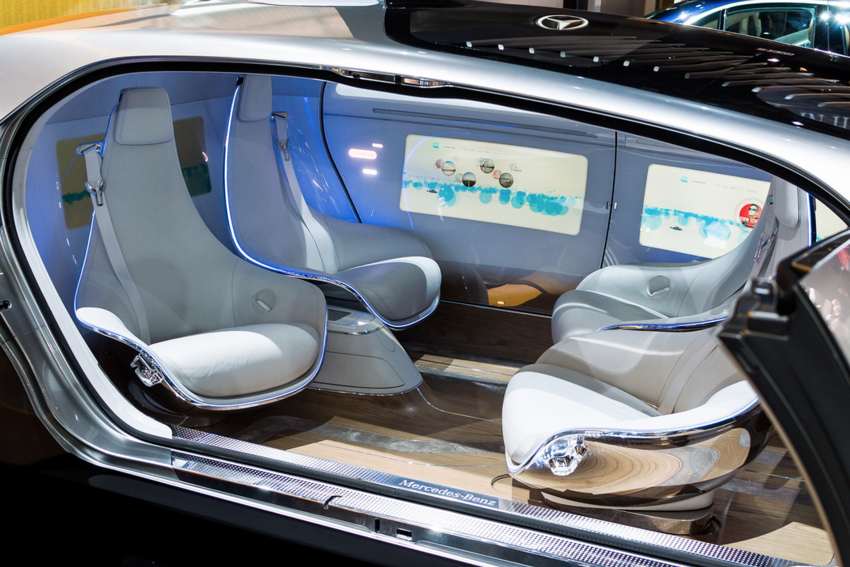
Mercedes Benz driverless .

Types of technology

There are various types of technology that change the world day in day out.. Just to discuss some ;

  1. Crispr
    Imagine a world where crushing genetic diseases like Huntington’s and cystic fibrosis
    can be cured. CRISPR Cas-9 (an abbreviation standing for
    “Clustered Regularly Interspaced Short Palindromic Repeats”) is a gene-splicing
    technology capable of finding and removing mutated sections of DNA. Once this material is
    eliminated, crispr technology can replace the
    mutated sections with non-mutated variants.
    As a result, crispr has the power to
    permanently eliminate certain types of genetic
    diseases from blood lines. The technology has
    already been used to eliminate cancer in some
    patients, and early results show that it may be
    possible to cure genetically caused blindness as
    well.
    2.Robot assistants
    Most of tge companies have
    developed a wide variety of robot assistants that can be used in factories or on the battlefield. The companies originally started as an arm of MIT and has since pioneered the development of intelligent robots that operate effectively in the real world.
    Knightscope is another company working on a line of robot assistants for security
    applications. For example, its K5 robot features four cameras and can recognize 300 licenses
    plates per minute, per camera. It can also detect suspicious networks that may be
    operated by hackers.

What is technology?

Technology is a body of knowledge
devoted to creating tools, processing actions and the
extracting of materials. The term ‘ Technology ” is wide,
and everyone has their way of understanding its meaning.
We use technology to accomplish various tasks in our
daily lives, in brief; we can describe technology as
products and processes used to simplify our daily lives.
We use technology to extend our abilities, making people
the most crucial part of any technological system.
Technology is also an application of science used to solve
problems. But it is vital to know that technology and
science are different subjects which work hand-in-hand to
accomplish specific tasks or solve problems.
We apply technology in almost everything we do in our
daily lives; we use technology at work, we use technology
for communication, transportation, learning,
manufacturing, securing data, scaling businesses and so
much more. Technology is human knowledge which
involves tools, materials, and systems. The application of
technology typically results in products. If technology is
well applied, it benefits humans, but the opposite is true, if
used for malicious reasons.

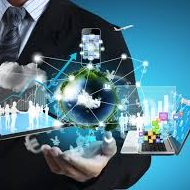
Technology at hand.
Design a site like this with WordPress.com
Get started