Cultivator and fertilizer applicator Fertis is especially suitable for deep row cultivation and aeration of soils – strip till technology up to the depth of 35 cm . It also ensures targeted application of reserve fertilization in two depths (to the seeds and to the roots) – due to which it is possible to decrease the applied amount of fertilizers while maintaining the required yields. The machine enables creation of distinctive ridges on the soil surface to maintain winter humidity, anti-erosion measure, basic soil preparation, creation of ridges in autumn (heavy and medium soils) and light soils in spring, ridge soil processing and fertilization under maize.
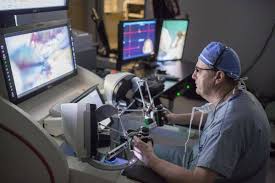
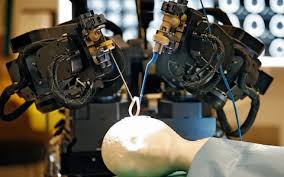
The technology used in neurosurgery is changing all the time. The use of magnification and special lighting during surgery is an “everyday” routine for these neurosurgeons. The operating microscope used by Neurosurgical Consultants is a late model microscope offering excellent optics, lighting and zoom magnification from 6X to 12X. The controls on the microscope are all motorized for precision and ease of use.Stereotactic surgery is minimally invasive surgery with extreme accuracy. It is the computerized link between a CT Scan or MRI Scan to the equipment used in the operating room. With a stereotactic technique, neurosurgeons can precisely place a needle into a very small lesion or tumor with an accuracy of one millimeter . Neuronavigation,, is the application of 3D views of the patient’s brain or spinal cord that are linked by computer to the instruments used during surgery. It includes stereotactic surgery. The acquisition of a BrainLab Neuronavigation System at the Steward Norwood Hospital has allowed the neurosurgeons of Neurosurgical Consultants, Inc., to stay in the forefront of this rapidly changing field.Spinal Fusions are not new to neurosurgeons. However, the development of metal (usually light weight Titanium) plates, rods and screws allow neurosurgeons to “lock” the bones in place. This allows for quicker healing. We now have in our armamentarium devices that maintain the height of a disc space after removal of the disc. These interspace “cages” come in different shapes and sizes. Some are made of Titanium, others come from donor bone. The uses of these devices and grafts has allowed for much shorter and easier lumbar fusion operations. Patients have less pain, ambulate sooner and are usually able to leave the hospital on the second postoperative day. Some techniques incorporate Neuronavigation to place the devices with greater accuracy and less risk than ever before. Makers of these devices include Medtronic and Globus Medical, and others.Pain control often falls into the discipline of Neurosurgery. There are now numerous Implantable devices used to control chronic pain. These include implantable pumps that constantly deliver medication into the spine and stimulators with electrodes that lay over the spinal cord. Both of theses implants block the sensation of pain before it gets to the brain. The doctors of Neurosurgical Consultants, Inc. are well versed in the latest pain implant technology. There are several vendors for these implants. Our most common supplier is Medtronic.Vertebral Compression Fractures are common problems for people 60 years and older. These fractures are very painful and often debilitating in this age group. Because these patients often have osteoporosis the fractures do not always heal well. The deformity in the bone can progress and lead to breathing and walking problems. In the past, the surgical treatment of spinal compression fractures involved long complicated operations with implantation of metal hardware. For a variety of reasons, many of these patients could not tolerate or benefit from this extensive surgery. Also, the recovery was long and difficult. We can now stabilize these fractures with a minimally invasive technique called Kyphoplasty. Through one or two small (5 mm) incision(s) on the back, a catheter with a balloon, called “KyphX Inflatable Bone Tamp“, is passed into the fractured vertebrae under x-ray guidance. After expanding the balloon (and the bone) plastic cement is injected into the cavity to stabilize the bone and relieve pain. Patients are often ambulatory the next day and out of the hospital in one to two days. The balloon devise is manufactured by Kyphon. Neurosurgeons often use CT Scans to make urgent diagnoses and plan treatments for patients in the emergency room and at other times. “Teleradiology” is the technology that allows physicians to see CT Scans, MRI Scans and other imaging s tudies from a remote location. During off hours, this technology is also available to the “on call” physician. Soon after an emergency CT Scan has been completed and we are notified, the neurosurgeon can access the scan, review the images and advise the treating physicians and nurses at the hospital on the best treatments for these often critically ill patients. If surgery is indicated, the preparation of the patient and the operating room gets underway, even before the neurosurgeon arrives at the hospital. This time saving can make a big difference in a patient’s outcome.Electronic Medical Record (EMR) keeping systems are now present in many doctor offices. They provide instant access to the all the parts of a patient’s “chart.” No longer must the paper chart be found before a question can be answered or prescription refilled. In addition to the obvious improved efficiency, patient privacy is maintained better than ever before . The electronic medical record solution used by Neurosurgical Consultants, Inc. is provided byAllMeds and meets all HIPAA requirements for privacy.
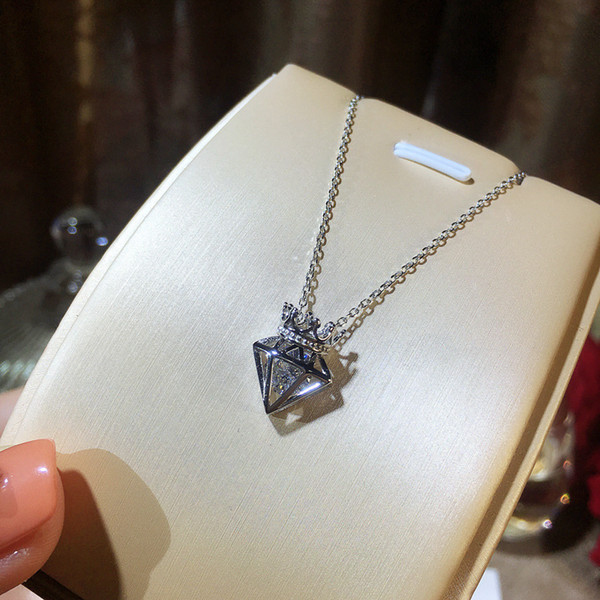
Want to monitor your activity, sleep or fertility but don’t want to wear a bulky fitness tracker? Or do you like the idea of being able to pay for lunch or your train ticket without having to get your purse out? The world of wearable tech is moving fast, and that means there’s an ever- growing range of smart jewellery crammed with of all sorts of clever gadgets – from stylish rings and pendants through to leather bracelets and watches to choose. “Over the last couple of years there has been a significant shift in the wearable tech category from fitness to wellness. From sleep and hormone trackers to stress and mental health monitors, the desire for a more holistic approach to wellbeing has driven innovation in tech, and this new breed of wearables have risen to the forefront.” But if you’ve never bought a piece of smart jewellery before, where should you start? Firstly, what do you want your gadget to do? Do you want a simple step counter or a contactless payment device, or do you want your wearable to give you reams of data about your health, wellbeing and stress levels? You also need to think about when you want to wear it. For example, you probably don’t want to wear a sports- style fitness bracelet if you’re all dressed up for a night out. Armes adds that you could “take time to evaluate how seamlessly it can fit into your everyday life” when choosig your accessory. With this mind, we tested a variety of smart jewellery for women and scored them on appearance, battery life and functionality. Here’s our verdict.
Advances in textile technology, computer engineering and materials science are promoting a new breed of functional fabrics resulting in some truly smart and clever clothing. Realization of this vision could be possible with the advent of wearable electronic textiles, where functionality is incorporated into the fabric. Clothing is being developed for protection from chemical, biological and nuclear threats. Besides, with the development of polymers with exotic qualities in terms of their mechanical, electrical and magnetic properties, scientists are ready to design electronic clothing with various specialties like heating, cooling, illuminating of body etc. Fashion designers are adding wires, circuits, and optical fibers to traditional textiles, creating garments that glow in the dark or keep the wearer warm.
Meanwhile, electronics engineers are sewing conductive threads and sensors into body suits that can map users whereabouts and respond to environmental stimuli. Researchers agree that the development of genuinely interactive electronic textiles is technically possible, and that challenges in scaling up the handmade garments will eventually be overcome. Ideas include the development of jacket-sleeve keypads for controlling cell phones, pagers, or MP3 players, and sportswear with integral fabric sensors and display panels, ideas for monitoring heart rate and blood pressure during a gym workout or morning run. Clothing fitted with textile global positioning system technology could also be suitable for locating skiers or Mountaineers in bad weathers or even for keeping a watch on young children.
Advances so far
Adopting electronic displays (LEDs) technologies to create colorful, novelty clothing items for example, glow-in-the-dark bridal gown, sparkling cocktail dresses, and costumes for opera singer. Further progress is expected in the form of tailor-made clothing.
Fibers powered by tiny, rechargeable batteries that are turned on by the wearer via a hidden switch causing the fibers to give shininess when the lights are dimmed.
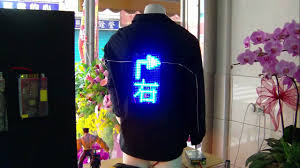
Development of a flexible, battery-powered optical fiber screen that can be woven into clothing. A prototype version integrated into a jacked displaying symbols is already in the market and more sophisticated versions may support advertising slogans, safety notices, or simply a range of different geometric patterns can be switched on and off.
Production of low-cost jackets for joggers and walkers with a pulse monitor stitched to the left cuff. Embedded sensors control conductive material on the back of the jacket to keep the wearer warm should the temperature drop, while electroluminescent wires are fixed to pockets and hems to light up in the dark as a safety feature.
The marriage of woven fabric with electronics is finding favor in the world of interior design as well inform of electro-textile wall panels. The panel exploits reflective coloring. The fabric contains interwoven stainless steel yarns, painted with thermo-chromic inks, which are connected to drive electronics programmed to change color in response to heat from the conducting wires. At the outset, main users are going to be medical, military, and industrial areas with compelling applications and affordability. The simulation environment is already being used to model a garment that can sense its own shape thus helping patients to learn about their exercise requirement. Creating a wearable version of a giant textile sensornet designed to detect noise.
It is envisaged that efforts should be to stay as close as possible to conventional large-scale cutting and sewing techniques when thinking about how electronic textile clothing could be made. Cutting electronic cloth clearly makes it more difficult to make good connections between different parts of the same garments and one solution to it could be the manufacturing of seamless clothing, which would avoid the cutting and stitching problem altogether. The cost of developing and manufacturing such sophisticated fabrics is likely to put them beyond the reach of the fashion industry for the time being. Connections will be main point of weakness in electronic clothing. Moreover, researchers have yet to answer the million-dollar question, perhaps critical to consumer acceptance, about the washing of electronic fabrics. The challenge for industry is also to build in the security and privacy for the user of electronic clothing from hackers. Whatever the technical obstacles, researchers involved in the development of interactive electronic clothing appear universally confident that context-aware coast and sensory shirts are only a matter of time.
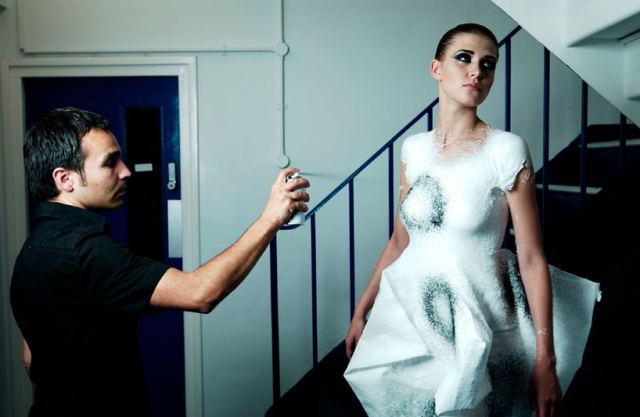
Fabrican’s patented spray-on fabric technology starts as a liquid suspension which is sprayed by a spray gun or an aerosol can. The fabric is formed by the cross-linking of fibers which adhere to each other and to the surface sprayed to create an instant non-woven fabric. The versatility of a sprayable fabric coating that seamlessly conforms to any shape removes technical and economic barriers to offering consumers customized products. Fabrican’s spray technology enable producers to readily vary products’ physical properties (shape, size, texture, colour—even scent) to suit each customer’s specification, without the need for re-tooling or stocking different grades of material. Fabrican uses different types of fibers, from natural to synthetic, including keratin fibers such as wool and mohair, cotton, nylon, cellulose, and carbon nanofibres.
Fabrican is the product of interdisciplinary research, linking the subjects of engineering, material science and design. The commercial development of products and manufacturing processes is underway, and the technology is licensed to global brands in several commercial sectors.
Fabrican is at the forefront of innovations in material science, developing smart fabrics incorporating nano-technology, “second skin” for the medical and cosmetic industries, and sprayable conductive fabrics to interface with wearable technology. Spray-on fabrics liberate product and apparel designers from the constraints imposed by the need for cutting to size, stitching, and fitting of traditional materials.


 purity's blog