Autonomous vehicles

A self-driving car, also known as a robot car, autonomous car, or driverless car,[ is a vehicle that is capable of sensing its environment and moving with little or no human input.[3]

Autonomous cars combine a variety of sensors to perceive their surroundings, such as radar, Lidar, sonar, GPS, odometry and inertial measurement units. Advanced control systems interpret sensory information to identify appropriate navigation paths, as well as obstacles and relevant signage.

Autonomous vehicles, as a digital technology, have certain characteristics that distinguishes them from other types of technologies and vehicles. Due to these characteristics, autonomous vehicles are able to be more transformative and agile to possible changes. The characteristics will be explained based on the following subjects: homogenization and decoupling, connectivity, reprogrammable and smart, digital traces and modularity.

Homogenization and decoupling

Homogenization comes from the fact that all digital information assumes the same form. During the ongoing evolution of the digital era, certain industry standards have been developed on how to store digital information and in what type of format. This concept of homogenization also implies to autonomous vehicles. In order for autonomous vehicles to perceive their surroundings, they have to use different techniques each with their own accompanying digital information (e.g. radar, GPS, motion sensors and computer vision). Due to homogenization, the digital information from these different techniques is stored in a homogeneous way. This implies that all digital information comes in the same form, which means their differences are decoupled, and digital information can be transmitted, stored and computed in a way that the vehicles and its operating system can better understand and act upon it. Homogenization also helps to exponentially increase the computing power of hard- and software (Moore’s law) which also supports the autonomous vehicles to understand and act upon the digital information in a more cost-effective way, therefore lowering the marginal costs.;

Connectivity

Connectivity means that users of a certain digital technology can connect easily with other users, other applications or even (other) enterprises. In the case of autonomous vehicles, it is essential for them to connect with other ‘devices’ in order to function most effectively. Autonomous vehicles are equipped with communication systems which allow them to communicate with other autonomous vehicles and roadside units to provide them, amongst other things, with information about road work or traffic congestion. In addition, scientists believe that the future will have computer programs that connect and manage each individual autonomous vehicle as it navigates through an intersection. This type of connectivity must replace traffic lights and stop signs.[ These types of characteristics drive and further develop the ability of autonomous vehicles to understand and cooperate with other products and services (such as intersection computer systems) in the autonomous vehicles market. This could lead to a network of autonomous vehicles all using the same network and information available on that network. Eventually, this can lead to more autonomous vehicles using the network because the information has been validated through the usage of other autonomous vehicles. Such movements will strengthen the value of the network and is called network externalities.;

Reprogrammable

Another characteristic of autonomous vehicles is that the core product will have a greater emphasis on the software and its possibilities, instead of the chassis and its engine. This is because autonomous vehicles have software systems that drive the vehicle meaning that updates through reprogramming or editing the software can enhance the benefits of the owner (e.g. update in better distinguishing blind person vs. non-blind person so that the vehicle will take extra caution when approaching a blind person). A characteristic of this reprogrammable part of autonomous vehicles is that the updates need not only to come from the supplier, because through machine learning (smart) autonomous vehicles can generate certain updates and install them accordingly (e.g. new navigation maps or new intersection computer systems). These reprogrammable characteristics of the digital technology and the possibility of smart machine learning give manufacturers of autonomous vehicles the opportunity to differentiate themselves on software. This also implies that autonomous vehicles are never finished because the product can be continuously be improved.

Digital traces

Autonomous vehicles are equipped with different sorts of sensors and radars. As said, this allows them to connect and interoperate with computers from other autonomous vehicles and/or roadside units. This implies that autonomous vehicles leave digital traces when they connect or interoperate. The data that comes from these digital traces can be used to develop new (to be determined) products or updates to enhance autonomous vehicles’ driving ability or safety.

Modularity

Traditional vehicles and their accompanying (traditional) technologies are manufactured as a product that will be complete, and unlike autonomous vehicles, they can only be improved if they are redesigned or reproduced. As said, autonomous vehicles are produced but due to their digital characteristics never finished. This is because autonomous vehicles are more modular since they are made up out of several modules which will be explained hereafter through a Layered Modular Architecture. The Layered Modular Architecture extends the architecture of purely physical vehicles by incorporating four loosely coupled layers of devices, networks, services and contents into Autonomous Vehicles. These loosely coupled layers can interact through certain standardized interfaces.

  • (1) The first layer of this architecture consists of the device layer. This layer consists of the following two parts: logical capability and physical machinery. The physical machinery refers to the actual vehicle itself (e.g. chassis and carrosserie). When it comes to digital technologies, the physical machinery is accompanied by a logical capability layer in the form of operating systems that helps to guide the vehicles itself and make it autonomous. The logical capability provides the control over the vehicle and connects it with the other layers.;
  • (2) On top of the device layer comes the network layer. This layer also consists of two different parts: physical transport and logical transmission. The physical transport layer refers to the radars, sensors and cables of the autonomous vehicles which enable the transmission of digital information. Next to that, the network layer of autonomous vehicles also has a logical transmission which contains communication protocols and network standard to communicate the digital information with other networks and platforms or between layers. This increases the accessibility of the autonomous vehicles and enables computational power of a network or platform.;
  • (3) The service layer contains the applications and their functionalities that serves the autonomous vehicle (and its owners) as they extract, create, store and consume content with regards to their own driving history, traffic congestion, roads or parking abilities for example.; and
  • (4) The final layer of the model is the contents layer. This layer contains the sounds, images and videos. The autonomous vehicles store, extract and use to act upon and improve their driving and understanding of the environment. The contents layer also provides metadata and directory information about the content’s origin, ownership, copyright, encoding methods, content tags, geo-time stamps, and so on (Yoo et al., 2010).

The consequence of layered modular architecture of autonomous vehicles (and other digital technologies) is that it enables the emergence and development of platforms and ecosystems around a product and/or certain modules of that product. Traditionally, automotive vehicles were developed, manufactured and maintained by traditional manufacturers. Nowadays app developers and content creators can help to develop more comprehensive product experience for the consumers which creates a platform around the product of autonomous vehicles.
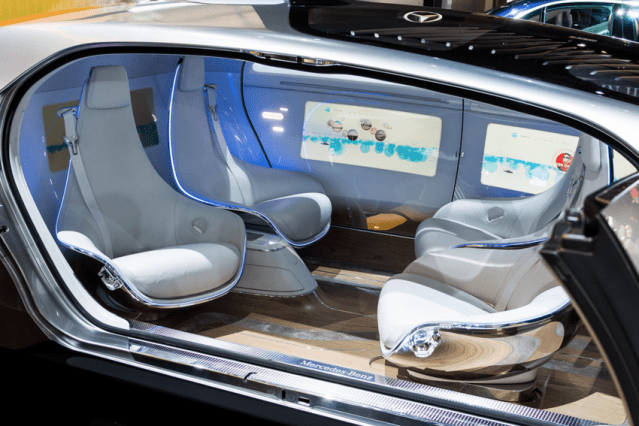
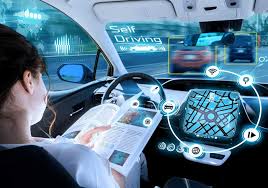
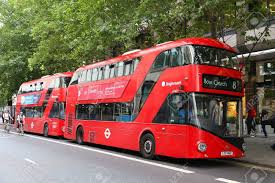
DRIVERLESS CAR.
AUTODRIVE

electric motorcycles and scooters.

Electric motorcycles and scooters are plug-in electric vehicles with two or three wheels. The electricity is stored on board in a rechargeable battery, which drives one or more electric motors. Electric scooters (as distinct from motorcycles) have a step-through frame.

Power source

ZEV 7100LR (lead/sodium silicate battery)

Yamaha FC-AQEL (fuel cell prototype)

Suzuki Burgman (fuel cell prototype)

Most electric motorcycles and scooters today are powered by rechargeable lithium ion batteries, though some early models used nickel-metal hydride batteries.

Alternative types of batteries are available. Z Electric Vehicle has pioneered use of a lead/sodium silicate battery (a variation on the classic lead acid battery invented in 1859, still prevalent in automobiles) that compares favorably with lithium batteries in size, weight, and energy capacity, at considerably less cost.[EGen says its lithium-iron phosphate batteries are up to two-thirds lighter than lead acid batteries and offer the best battery performance for electric vehicles.

EGen says its lithium-iron phosphate batteries are up to two-thirds lighter than lead acid batteries and offer the best battery performance for electric vehicles.[

In 2017, the first vehicle in the US to use the new Lithium Titanium Oxide (LTO) battery non-flammable battery technology is a scooter called The Expresso.[ This new technology charges a battery in less than 10 minutes and withstands 25,000 charges (the equivalent of 70 years of daily charges). The technology, created by Altairnano, is currently being used in China where over 10,000 urban buses run on these fast charge batteries.

Charging

All electric scooters and motorcycles provide for recharging by plugging into ordinary wall outlets, usually taking about eight hours to recharge (i.e. overnight). Some manufacturers have designed in, included, or offer as an accessory, the high-power CHAdeMO level 2 charger, which can charge the batteries up to 95% in an hour.[

Battery swapping

Manufacturers like Zero Motorcycles and recent entrants to the scooter market Gogoro and Unu have designed machines that allow quick battery swapping, for apartment dwellers who do not have a garage outlet, or for an instant recharge on the go.[

Hybrid

Honda has developed an experimental internal combustion/electric hybrid scooter. Yamaha has also developed a hybrid concept motorcycle called Gen-Ryu. It uses a 600cc engine and an additional electric motor Piaggio MP3 Hybrid uses a 125cc engine and an additional 2.4 kW motor.

Fuel cell

There are several experimental prototypes using fuel cell technology. ENV developed by Intelligent Energy is a hydrogen fuel cell prototype. The motorcycle has a range of 100 miles (160 km) and can reach a top speed of 50 mph (80 km/h).[62] Suzuki has also developed a concept hydrogen fuel cell scooter based on the Suzuki Burgman.[63] Yamaha has created a hydrogen fuel cell prototype called FC-AQEL, which is considered equivalent to a 125cc vehicle.[64] Honda has also developed a hydrogen fuel cell scooter which uses the Honda FC Stack.[59

Performance

B

Electric and gasoline powered motorcycles and scooters of the same size and weight are roughly comparable in performance.[ In August 2013 Road and Track evaluated a high-end electric motorcycle as faster and better handling than any conventionally powered bike.[66]Electric machines have better 0 to 60 acceleration, since they develop full torque immediately, and without a clutch the torque is instantly available.

Range

Electric motorcycles and scooters suffer considerable disadvantage in range, since batteries cannot store as much energy as a tank of gas.[Anything over 130 miles (210 km) on a single charge is considered an exceptionally long range. As a result, while electric machines excel as daily commuters traveling a fixed distance round trip, on the open road riders experience inhibiting range anxiety. Also electric power trades off range against speed. For instance the current longest range electric scooter, the ZEV 10 LRC, travels 220 km (140 mi) at 89 km/h (55 mph), but according to the manufacturer the range drops to about 129 km (80 mi) at 112 km/h (70 mph). A BBC news blog reported that an Austrian bike, the Johammer J1, is capable of travelling 200 km (124 miles) on a single charge.

Maintenance

Electric scooters and motorcycles need very little maintenance. As Wired magazine’s transportation editor Damon Lavrinc reported after an experiment of trying to go six months using nothing but a Zero electric motorcycle: “[w]ith only a battery, a motor, and a black box (i.e. the controller) to keep you moving, electric motorcycles are a breeze to maintain compared to a conventional motorcycle, what with all the lubricating and adjusting and tuning you have to do. You basically just worry about consumables: brake pads, tires, maybe a brake fluid flush. That’s about it.” Electric scooters and motorcycles equipped with regenerative braking typically have longer brake pad life because a significant portion of braking duty can be performed with the electric motor instead of the mechanical friction brakes.

Fuel cost

At between one and two cents per mile (depending on electric rates), electric machines enjoy an enormous fuel cost advantage. Three months and 2,800 km (1,700 mi) of commuting on an electric motorcycle cost Lavrinc less than $30 for electricity; on a BMW gasoline bike a single trip of 650 km (400 mi) cost nearly the same. In Australia, UBCO battery Electric Motorbike running cost is 88¢ per 100 km[

Refuel time

Even with special equipment, charging a battery takes significantly longer than filling a gas tank, which can make electric vehicles less flexible than their gasoline counterparts. With the maximum number of accessory chargers, it takes over an hour to charge a Zero S ZF6.5’s 6.5kWh battery to 95% capacity. This refuel time also increases with battery capacity; the Zero S ZF13.0 (which has a 13.0kWh battery) takes over 2 hours to charge to 95% capacity using the maximum number of accessory chargers. While this may not pose an issue to commuting in an electric vehicle with overnight charging, it will likely impact taking long road trips that require refueling during the journey.[

Noise

Electric vehicles are far quieter than gas powered ones, so silent they may sneak up on unwary pedestrians.[ Some are equipped to emit artificial noise. Popular Mechanics called the comparative quiet of electric motorcycles the greatest difference between them and their gas counterparts, and a safety bonus because the rider can hear danger approaching. Whether a loud motorcycle is more noticeable and thus more safe than a quiet one is contested. At high speed the whine of an electric motorcycle is said to sound “like a spaceship.”


Electric buses

An electric bus is a bus that is powered by electricity.

Electric buses can store the electricity on board, or can be fed continuously from an external source. Buses storing electricity are majorly battery electric buses, in which the electric motor obtains energy from an on-board battery, although examples of other storage modes do exist, such as the gyrobus which uses flywheel energy storage. In the second case, electricity is supplied by contact with outside power sources. For example, overhead wires, as in the trolleybus, or with non-contact conductors on the ground, as seen in the Online Electric Vehicle. This article mostly deals with buses storing the electricity on board.

As of 2017, 99% of electric buses have been deployed in China, with more than 385,000 buses on the road, which is 17% of China’s total bus fleet.[

Buses can use capacitors instead of batteries to store their energy. Ultracapacitors can only store about 5 percent of the energy that lithium-ion batteries hold for the same weight, limiting them to a couple of miles per charge. However ultracapacitors can charge and discharge much more rapidly than conventional batteries. In vehicles that have to stop frequently and predictably as part of normal operation, energy storage based exclusively on ultracapacitors can be a solution.[

China is experimenting with a new form of electric bus, known as Capabus, which runs without continuous overhead lines by using power stored in large on-board electric double-layer capacitors, which are quickly recharged whenever the vehicle stops at any bus stop (under so-called electric umbrellas), and fully charged in the terminus.

A few prototypes were being tested in Shanghai in early 2005. In 2006, two commercial bus routes began to use electric double-layer capacitor buses; one of them is route 11 in Shanghai. In 2009, Sinautec Automobile Technologies,[ based in Arlington, VA, and its Chinese partner, Shanghai Aowei Technology Development Company are testing with 17 forty-one seat Ultracap Buses serving the Greater Shanghai area since 2006 without any major technical problems. Another 60 buses will be delivered early next year with ultracapacitors that supply 10 watt-hours per kilogram.

The buses have very predictable routes and need to stop regularly, every 3 miles (4.8 km), allowing opportunities for quick recharging. The trick is to turn some bus stops along the route into charging stations. At these stations, a collector on the top of the bus rises a few feet and touches an overhead charging line. Within a couple of minutes, the ultracapacitor banks stored under the bus seats are fully charged. The buses can also capture energy from braking, and the company says that recharging stations can be equipped with solar panels. A third generation of the product, will give 20 miles (32 km) of range per charge or better. Such a bus was delivered in Sofia, Bulgaria in May 2014 for 9 months’ test. It covers 23 km in 2 charges.[

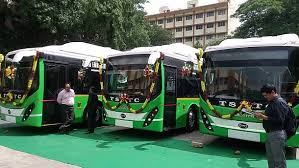
electric bus
battery electric bus

Fashion in a can..

It’s trouble enough finding the right outfit in your closet – imagine if all you
needed was a can to spray it on.

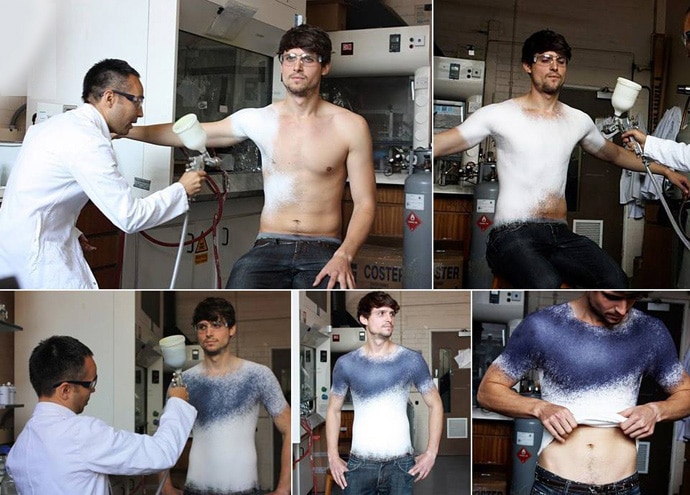
Dr. Manel Torres, a former student of the Royal College of Art and Imperial College London, is slowly getting us there. He’s created Fabrican, a technology that literally sprays fabric onto the body. Coming from a fashion background, Torres’ initial idea was to create clothes for the catwalk, but 10 years of toil and development have led him to realize the potential for many other uses beyond a new dress for Lady Gaga: spray-on bandages that are ready-sterilized, spray-on cleaning cloths or spray-on upholstery for cars and homes are just a few other applications, the latter two he’s discussing with commercial partners.

Fashionable spray-on

Torres created the formula for the spray with the help of Paul Luckham, a professor of particle technology at Imperial, offering him a 20% stake
in Fabrican Ltd (established in 2003) in return for working with him on the project one day a week. Torres owns the other 80%.
Luckham and Torres milled down old fabrics and mixed the fibers with a polymer, then added a solvent that would evaporate before the formula
hit a surface and turned solid on contact.

The technology has gradually improved and become relatively cheap to create. Five years ago the
“fabric” would fall apart in your hands when sprayed; today it has the feel of suede and can be taken off and even worn once more.
With patents granted in the U.S., Europe and Asia, Torres is now looking for those all- important commercial partners to help develop the formula and apply the spray
(no pun intended) en mass. One of the two main commercial partners he’s nabbed so far include
Novasol, a Spanish aerosol company that makes silly string, who Torres first contacted with his idea. “They laughed and said, ‘You’ll never make
fabric,'” he says. “Guess who has licensed me the deal.” Novasol is expected to start selling the
Fabrican spray, labeled as First Edition, in four months as an arts & crafts product.
The other partner is a household goods company, which is testing whether Fabrican can be used to
spray out a wipe that includes soap particles and has an abrasive texture.
Torres is most excited about what Fabrican could achieve in the medical field, as pre-sterilized gauze or bandages. Since the fabric is cold on
application, it could also be useful for burns victims.

Spray-on clothes.

Technology in healthcare birthing rooms.

Developments and Technology
Due to the growth of new technologies and ideas
are constantly being developed in order to make childbirth safer and easier on both the mother and baby. Attitudes and expectations towards childbirth have changed
throughout the years and new methods of easing pain
during the process have made a huge impact on

mothers.
New technology is being by nurses in order to give the best quality care to patients and make the childbearing
experience as easy, safe, and painless as possible.
Attitudes towards childbirth have changed drastically over the past hundred years. Today, pregnant women expect their journeys through childbirth to be healthy. Because of the new developments in the past years, this is a reasonable
way to think after so many technological advances have
made labor and delivery both safe and sanitary tasks.
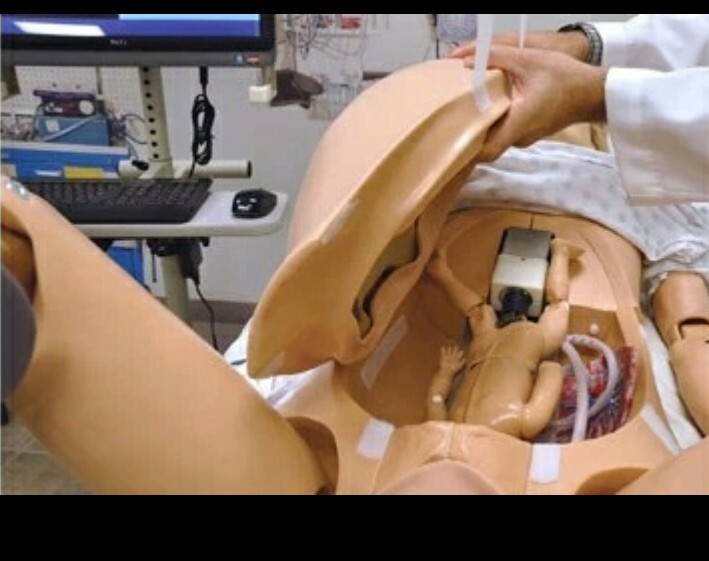
To enhance better understanding of birth and skills, simulation mannequins have become extremely helpful in
labor and delivery training units. There are both baby and mother mannequins that make sounds and are able to display a real birth.

Birth simulator

These simulations are excellent team
building activities for groups of nurses and can be used
without the risk of harming a mother or child.
Nurses monitor the baby before and during birth using
Doppler ultrasound technology to detect the heartbeat. New
technological advances have made this task easier on the
mother known as wireless fetal monitoring. This wireless
telemetry monitor detects the heart rate and contractions of
a baby without the use of cables fastened to a unit. Some
researchers have said it may shorten the first stage of labor
and make a difference in pain level.
Oxytocin is a drug used to start or increase the frequency of
contractions in labor and is usually administered by an IV.
Smart pumps are tools used to administer oxytocin in
precise amounts. They are programmed using specific
dosage guidelines and will not go beyond the certain level
they are set to.
All of these new developments in labor and delivery units
have made childbirth easier and less stressful on mother’s,
nurses and doctors. Technology will continue to make a
difference and be utilized in order to give the best quality
care to patients.


Design a site like this with WordPress.com
Get started