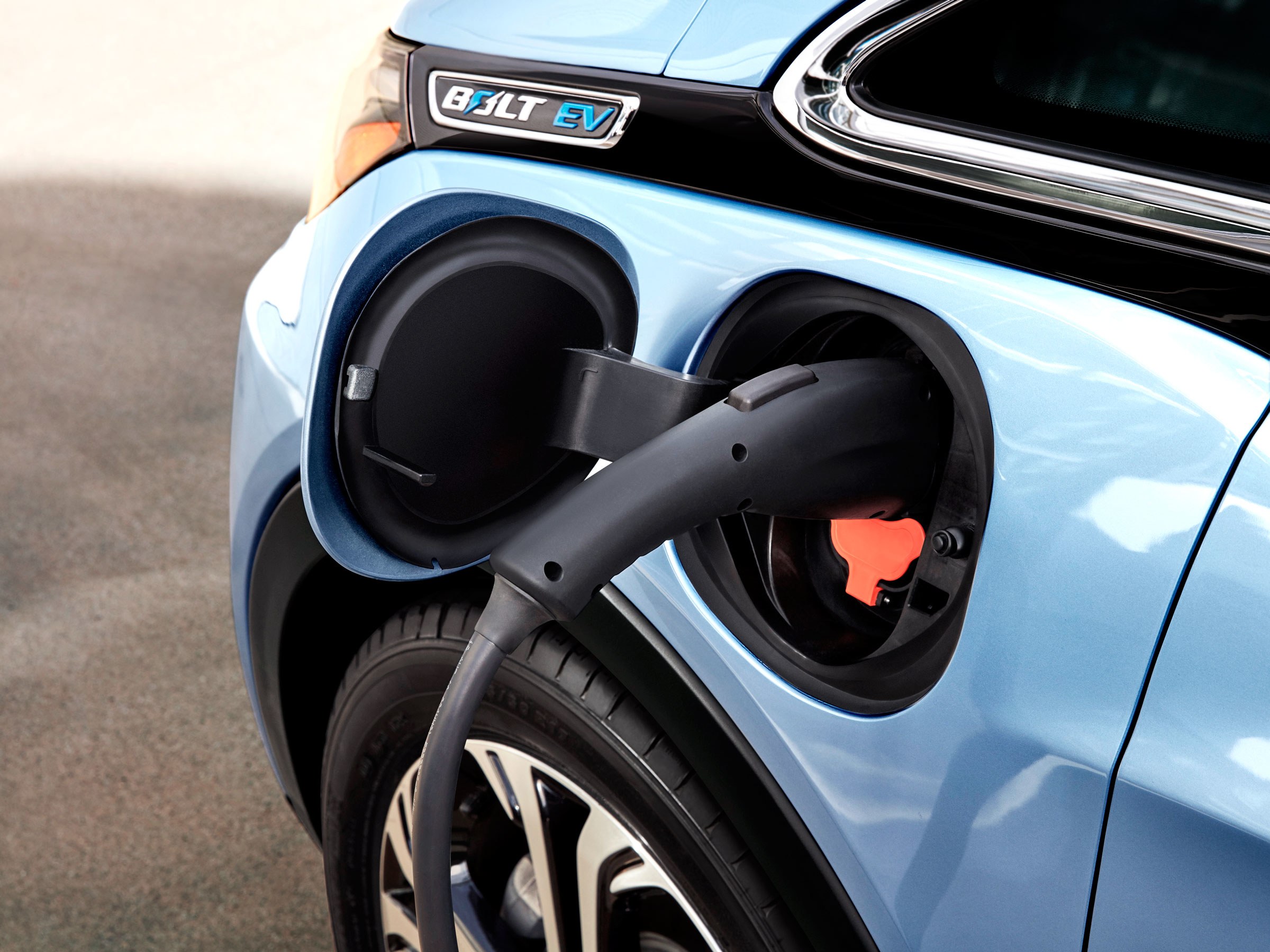
Once upon a time electric cars were either compact commuters that screamed “tree hugger” or slick luxury models that cost more than six figures. But those days are over. We’re now into the third generation of some models, and we’re even seeing the demise of some electrics, like the groundbreaking plug-in Chevy Volt. Today, there are dozens of different EV and plug-in hybrid models available in the U.S., with plenty of startups on the horizon. Models range from button-cute all-electric coupes cars to hybrid Chrysler Pacifica minivans to pickup trucks with electric assist. So, now there’s real competitio in electrification. Many of these models are also connected, offering support for Apple CarPlay , Android Auto or both. Here are the best-of- breed EV, plug-in and hybrid electrics, from least to most expensive.
In a natural gas powered vehicle, energy is released by combustion of essentially Methane gas (CH 4) fuel with Oxygen (O 2) from the air to carbon dioxide (CO 2) and water vapor (H 2O) in an internal combustion engine. Methane is the cleanest burning hydrocarbon and many contaminants present in natural gas are removed at source. Existing gasoline-powered vehicles may be converted to run on CNG or LNG, and can be dedicated (running only on natural gas) or bi-fuel (running on either gasoline or natural gas). Diesel engines for heavy trucks and busses can also be converted and can be dedicated with the addition of new heads containing spark ignition systems, or can be run on a blend of diesel and natural gas, with the primary fuel being natural gas and a small amount of diesel fuel being used as an ignition source. It is also possible to generate energy in a small gas turbine and couple the gas engine or turbine with a small electric battery to create a hybrid electric motor driven vehicle.
Convenient and cost effective gas storage and fuelling is a key challenge compared to petrol and diesel vehicles since the natural gas is pressurized and/or – in the case of LNG – the tank needs to be kept cold. The lower energy density of gases compared to liquid fuels is mitigated to a great extent by high compression or gas liquefaction, but requires a trade-off in terms of size/complexity/weight of the storage container, range of the vehicle between refueling stops, and time to refuel. Although similar storage technologies may be used for and similar compromises would apply to a hydrogen vehicle as part of a proposed new hydrogen economy, methane as a gaseous fuel is safer than hydrogen due to its lower flammability, low corrosivity and better leak tightness due to larger molecular weight/ size, resulting in lower price hardware solutions based on proven technology and conversions. Many other factors hold back NGV popularization for individual mobility applications, i.e. private vehicles, including the cost of new vehicles, additional weight, unfamiliarity with the technology, lack of refueling and storage infrastructure, and lack of supply due to relatively small demand compared with other petroleum-based fuels such as gasoline and diesel.
Do you find the idea of a three-wheeled car fascinating? Three-wheeled cars are very uncommon and may even be considered unusable by some people, but we find that they are interesting to learn about and even more interesting to drive. Keep reading to discover our top 10 picks from the category of three-wheeled mass production concept cars, prototypes and futuristic concept cars designed for contest-only presentation.
Three wheeled car
Benz wanted to create a four-wheel vehicle, but he simply
couldn’t develop a steering system he thought was
adequate, so he connected the engine to two wheels at the
rear and placed one up front that was controlled by a
horizontal bar.
The world’s first car may have been a three-wheeler, or trike
design, but it was by no means the last. In fact, three-wheel
cars were once very common on the roads, and even some
of the larger automakers like Mazda and BMW made them.
Today, three-wheelers are still on the road, and car
companies continue to make exotic concept cars with just
three wheels. But why make a vehicle with three wheels,
anyway? What’s the point?
The benefits include the potential for smaller size, making
transportation cheaper, simpler and even more fuel-efficient.
Many of them fill the gap between car and motorcycle,
offering a package that’s light and maneuverable like a
motorcycle, yet with a car’s seating and protection benefits.
They also boast improved aerodynamics because of their
inherently triangular shape, yet with one fewer wheel, some
designs are not quite as stable and therefore are more
prone to tipping over than conventional, four-wheeled cars.
However, there are plenty of them out there. Some are
small cars, some are light-duty trucks or commercial
vehicles, and others are pure performance machines not
unlike big go-karts and motorcycles. Some have two wheels
up front, others have just one. The designs are as widely
varied as the Reliant Robin, a snub-nosed three-wheeler that
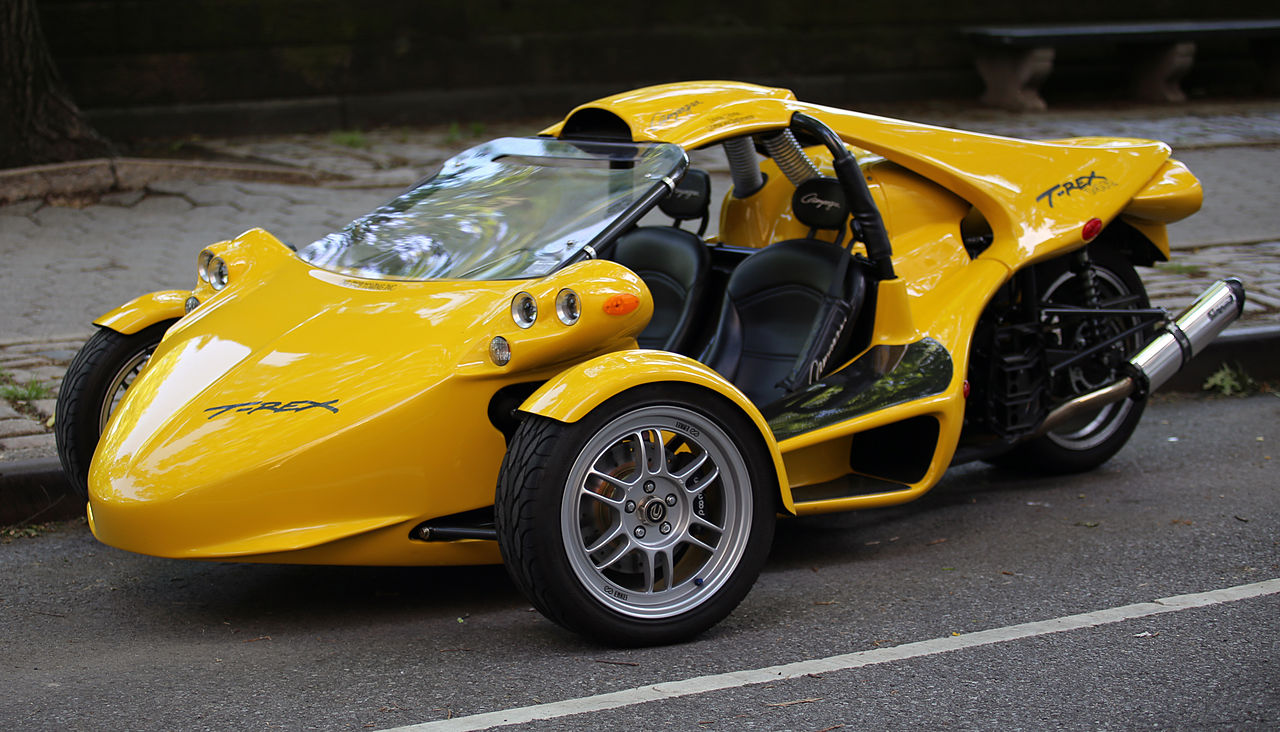
looks a lot like a clown car, to the Campagna Motors T-Rex,
which can accelerate from 0 to 60 miles per hour (0 to 96.6
kilometers per hour) in about four seconds.
An electric bicycle also known as an e-bike is a bicycle with an integrated electric motor which can be used for propulsion. Many kinds of e-bikes are available worldwide, from e-bikes that only have a small motor to assist the rider’s pedal-power (i.e., (pedelecs) to somewhat more powerful e-bikes which tend closer to moped-style functionality: all, however, retain the ability to be pedalled by the rider and are therefore not electric motorcycles.
Motors and drivetrains
The two most common types of hub motors used in electric bicycles are brushed and brushless. Many configurations are available, varying in cost and complexity; direct-drive and geared motor units are both used. An electric power-assist system may be added to almost any pedal cycle using chain drive, belt drive, hub motors or friction drive. BLDC hub motors are a common modern design. The motor is built into the wheel hub itself, and the stator fixed solidly to the axle, and the magnets attached to and rotating with the wheel. The bicycle wheel hub is the motor. The power levels of motors used are influenced by available legal categories and are often, but not always limited to under 750 watts.
Another type of electric assist motor, often referred to as the mid-drive system, is increasing in popularity. With this system, the electric motor is not built into the wheel but is usually mounted near (often under) the bottom bracket shell. In more typical configurations, a cog or wheel on the motor drives a belt or chain that engages with a pulley or sprocket fixed to one of the arms of the bicycle’s crankset. Thus the propulsion is provided at the pedals rather than at the wheel, being eventually applied to the wheel via the bicycle’s standard drive train.
Because the power is applied through the chain and sprocket, power is typically limited to around 250–500 watts to protect against fast wear on the drivetrain. An electric mid-drive combined with an internal gear hub at the back hub may require care due to the lack of a clutchmechanism to soften the shock to the gears at the moment of re-engagement. A continuously variable transmission or a fully automatic internal gear hub may reduce the shocks due to the viscosity of oils used for liquid coupling instead of the mechanical couplings of the conventional internal gear hubs.
Batteries
E-bikes use rechargeable batteries, electric motors and some form of control. Battery systems in use include sealed lead-acid (SLA), nickel-cadmium (NiCad), nickel-metal hydride (NiMH) or lithium-ion polymer (Li-ion). Batteries vary according to the voltage, total charge capacity (amp hours), weight, the number of charging cycles before performance degrades, and ability to handle over-voltage charging conditions. The energy costs of operating e-bikes are small, but there can be considerable battery replacement costs. The lifespan of a battery pack varies depending on the type of usage. Shallow discharge/recharge cycles will help extend the overall battery life.
Range is a key consideration with e-bikes, and is affected by factors such as motor efficiency, battery capacity, efficiency of the driving electronics, aerodynamics, hills and weight of the bike and rider.[36][37] Some manufacturers, such as the Canadian BionX or American Vintage Electric Bikes,[38] have the option of using regenerative braking, the motor acts as a generator to slow the bike down prior to the brake pads engaging.[39] This is useful for extending the range and the life of brake pads and wheel rims. There are also experiments using fuel cells. e.g. the PHB. Some experiments have also been undertaken with super capacitors to supplement or replace batteries for cars and some SUVS. E-bikes developed in Switzerland in the late 1980s for the Tour de Sol solar vehicle race came with solarcharging stations but these were later fixed on roofs and connected so as to feed into the electric mains. The bicycles were then charged from the mains, as is common today. While ebike batteries were produced mainly by bigger companies in past, many small to medium companies have started using innovative new methods for creating more durable batteries. State of the art, custom built automated precision CNC spot welding machines[41] created 18650 battery packs[ are commonly used among Do-it-yourself ebike makers.
Controllers
There are two distinct types of controllers designed to match either a brushed motor or brushless motor. Brushless motors are becoming more common as the cost of controllers continues to decrease. (See the page on DC motors which covers the differences between these two types.)
Controllers for brushless motors: E-bikes require high initial torque and therefore models that use brushless motors typically have Hall sensor commutation for speed and angle measurement. An electronic controller provides assistance as a function of the sensor inputs, the vehicle speed and the required force. The controllers generally allow input by means of potentiometer or Hall Effect twist grip (or thumb-operated lever throttle), closed-loop speed control for precise speed regulation, protection logic for over-voltage, over-current and thermal protection. Bikes with a pedal assist function typically have a disc on the crank shaft featuring a ring of magnets coupled with a Hall sensor giving rise to a series of pulses, the frequency of which is proportional to pedaling speed. The controller uses pulse width modulation to regulate the power to the motor. Sometimes support is provided for regenerative braking but infrequent braking and the low mass of bicycles limits recovered energy. An implementation is described in an application note for a 200 W, 24 V Brushless DC (BLDC) motor.
Controllers for brushed motors: Brushed motors are also used in e-bikes but are becoming less common due to their intrinsic lower efficiency. Controllers for brushed motors however are much simpler and cheaper due to the fact they don’t require hall sensor feedback and are typically designed to be open-loop controllers. Some controllers can handle multiple voltages.
Design variations
Diagram illustrating a standard bicycle converted to an e-bike using a retail conversion kit
A folding e-bike
Not all e-bikes take the form of conventional push-bikes with an incorporated motor, such as the Cytronex bicycles which use a small battery disguised as a water bottle.[44][45] Some are designed to take the appearance of low capacity motorcycles, but smaller in size and consisting of an electric motor rather than a petrol engine. For example, the Sakura e-bike incorporates a 200 W motor found on standard e-bikes, but also includes plastic cladding, front and rear lights, and a speedometer. It is styled as a modern moped, and is often mistaken for one.[c
Converting a non-electric bicycle to its electric equivalent can be complicated but numerous ‘replace a wheel’ solutions are now available on the market
An Electric Pusher Trailer is an e-bike design which incorporates a motor and battery into a trailer that pushes any bicycle. One such trailer is the two-wheeled Ridekick.[47]
Other, rarer designs include that of a ‘chopper’ styled e-bike, which are designed as more of a ‘fun’ or ‘novelty’ e-bike than as a purposeful mobility aid or mode of transport.
Electric cargo bikes allow the rider to carry large, heavy items which would be difficult to transport without electric power supplementing the human power input.
Various designs (including those mentioned above) are designed to fit inside most area laws, and the ones that contain pedals can be used on roads in the United Kingdom, among other countries.[c
Electric self-balancing unicycles do not conform to e-bike legislation in most countries and therefore cannot be used on the road,[ but can be utilized in the sidewalk. They are the cheapest electric cycles and used by the last mile commuters, for urban use and to be combined with public transport, including buses.
Tricycles
A modern electric cargo trike in use in London, with a payload of up to 250kg
Electric trikes have also been produced that conform to the e-bike legislation. These have the benefit of additional low speed stability and are often favored by people with disabilities. Cargo carrying tricycles are also gaining acceptance, with a small but growing number of couriers using them for package deliveries in city centres. Latest designs of these trikes resemble a cross-between a pedal cycle and a small van.
Health benefits
E-bikes can be a useful part of cardiac rehabilitation programmes, since health professionals will often recommend a stationary bike be used in the early stages of these. Exercise-based cardiac rehabilitation programmes can reduce deaths in people with coronary heart disease by around 27%; and a patient may feel safer progressing from stationary bikes to e-bikes. They require less cardiac exertion for those who have experienced heart problems.
E-bikes can also provide a source of exercise for individuals who have trouble exercising for an extended time (due to injury or excessive weight, for example) as the bike can allow the rider to take short breaks from pedaling and also provide confidence to the rider that they’ll be able to complete the selected path without becoming too fatigue or without having forced their knee joints too hard (people who need to use their knee joints without wearing them out unnecessarily may in some electric bikes adjust the level of motor assistance according to the terrain). A University of Tennessee study provides evidence that energy expenditure (EE) and oxygen consumption (VO2) for e-bikes are 24% lower than that for conventional bicycles, and 64% lower than for walking. Further, the study notes that the difference between e-bikes and bicycles are most pronounced on the uphill segments. Reaching VO2 Max, can really help your body as a whole. Professor Janet Lord of Birmingham University in the UK published a study that looked at older cyclists, ““The study looked at muscle mass, blood cholesterol, their VO2 Max, lung function, and in many of those measures we found they didn’t age! No loss of muscle, their bones were a little thin (but nothing like the general population), their blood pressure didn’t go up.[
There are individuals who claim to have lost considerable amounts of weight by using an electric bike. A recent prospective cohort study however found that people using e-bikes have a higher BMI. By making the biking terrain less of an issue, people who wouldn’t otherwise consider biking can use the electric assistance when needed and otherwise pedal as they are able.[ This means people of lower fitness levels or who haven’t cycled in many years can start enjoying the many health benefits E-bikes have to offer.
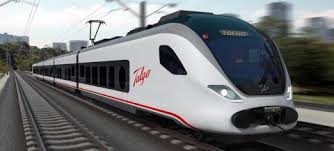
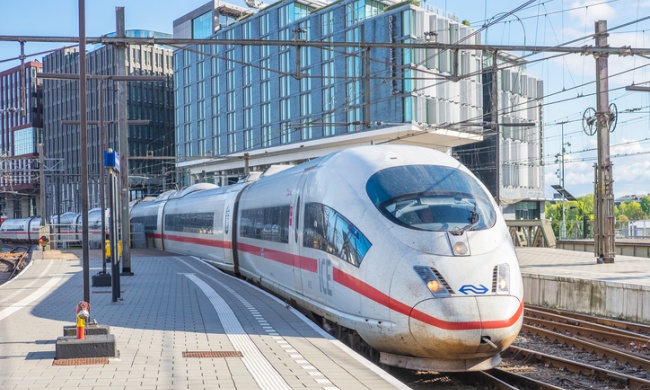
Electric trains can get their power from below thetrain or above it. Some electric trains run on tracks that have three rails instead of two. The outside tracks are for the train’s wheels and the middle one has electricity running through it. These trains have sliding shoes that are located on the bottom of the train.
Power is supplied to moving trains with a (nearly) continuous conductor running along the track that usually takes one of two forms: overhead line, suspended from poles or towers along the track or from structure or tunnel ceilings; third rail mounted at track level and contacted by a sliding “pickup shoe”. Both overhead wire and third-rail systems usually use the running rails as the return conductor but some systems use a separate fourth rail for this purpose.
In comparison to the principal alternative, the diesel engine, electric railways offer substantially better energy efficiency, lower emissions and lower operating costs. Electric locomotives are also usually quieter, more powerful, and more responsive and reliable than diesels. They have no local emissions, an important advantage in tunnels and urban areas. Some electric traction systems provide regenerative braking that turns the train’s kinetic energy back into electricity and returns it to the supply system to be used by other trains or the general utility grid. While diesel locomotives burn petroleum, electricity can be generated from diverse sources including renewable energy. [1]
Disadvantages of electric traction include high capital costs that may be uneconomic on lightly trafficked routes; a relative lack of flexibility – since electric trains need electrified tracks (or overhead wires)- and a vulnerability to power interruptions. [1]
Different regions may use different supply voltages and frequencies, complicating through service and requiring greater complexity of locomotive power. The limited clearances available under overhead lines may preclude efficient double-stack container service.[1]
Railway electrification has constantly increased in the past decades, and as of 2012, electrified tracks account for nearly one third of total tracks globally



 purity's blog